


























Views
Downloads
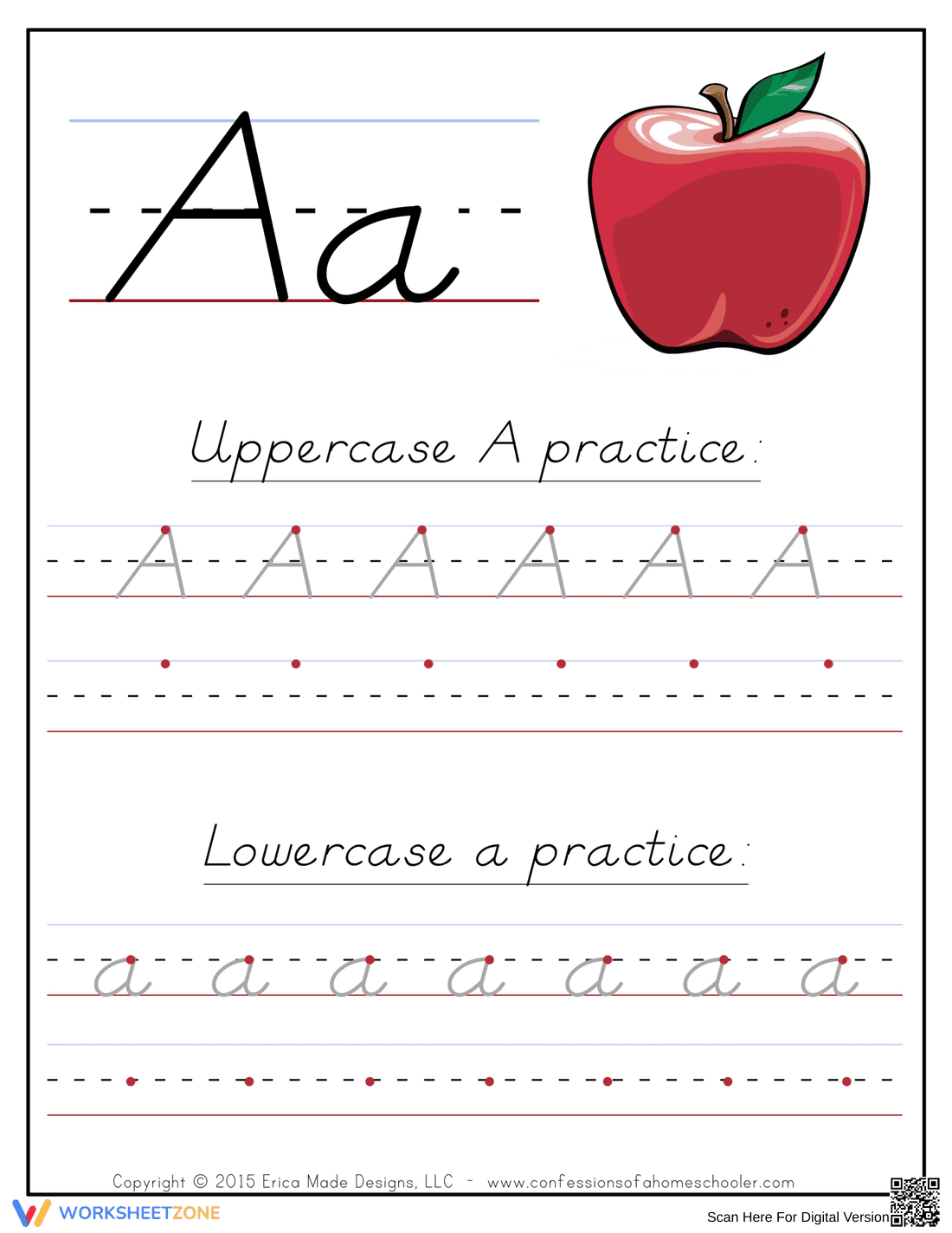

Letter A Tracing Practice | Printable Kindergarten Worksheet
Paste this activity's link or code into your existing LMS (Google Classroom, Canvas, Teams, Schoology, Moodle, etc.).
Students can open and work on the activity right away, with no student login required.
You'll still be able to track student progress and results from your teacher account.
This Kindergarten handwriting worksheet provides focused practice for the letter A, helping young learners develop fine motor skills and letter recognition. Students trace and write both uppercase and lowercase versions of the letter, establishing a strong foundation for literacy. By repeating the strokes, children build muscle memory essential for fluent writing.
At a Glance
- Grade: Kindergarten · Subject: Handwriting
- Standard:
CCSS.ELA-LITERACY.L.K.1.A— Print many upper- and lowercase letters- Skill Focus: Letter A formation
- Format: 1 page · 26 tasks · No answer key needed · PDF
- Best For: Morning work or literacy centers
- Time: 10–15 minutes
Inside this single-page PDF, you will find a clear, D'Nealian-style layout featuring a large apple illustration to reinforce the "A is for Apple" phonetic connection. The page is divided into two distinct sections: one for uppercase A and one for lowercase a. Each section includes a row of guided tracing letters followed by a row of starting dots for independent practice.
Zero-Prep Workflow
- Print: Select the single-page PDF and print enough copies for your class (30 seconds).
- Distribute: Hand out the sheets to students with pencils or crayons (1 minute).
- Review: Provide a quick verbal cue for the "down-down-across" stroke pattern and monitor progress (10 minutes).
This resource is an ideal sub-plan addition or a quiet-time activity that requires zero teacher setup.
Standards Alignment
This resource aligns with CCSS.ELA-LITERACY.L.K.1.A, which requires students to print many upper- and lowercase letters. It also supports fine motor development necessary for later writing standards. Both standard codes can be copied directly into lesson plans, IEP goals, or district curriculum mapping tools.
How to Use It
Use this worksheet during the "You Do" phase of a gradual release lesson on the alphabet. It works best after a whole-group demonstration of letter formation on a whiteboard. Teachers can use the independent practice row as a formative assessment to observe pencil grip and stroke directionality. Expected completion typically takes 10 to 15 minutes.
Who It's For
This activity is designed for Kindergarten students or preschoolers ready for pencil-and-paper tasks. It is particularly helpful for students needing extra fine motor support. Pair this worksheet with a physical alphabet anchor chart or a phonics song about the letter A to create a multi-sensory learning experience.
According to the RAND AIRS 2024 report, consistent, repetitive practice in letter formation is a critical predictor of early reading success and orthographic mapping. This worksheet targets the specific skill of printing upper- and lowercase letters, as defined by CCSS.ELA-LITERACY.L.K.1.A. Research by Fisher & Frey (2014) emphasizes that guided practice with immediate feedback—such as the tracing lines provided here—allows students to internalize correct motor patterns before errors become habitual. By providing 26 distinct opportunities for letter production on a single page, this resource ensures high-frequency engagement without overwhelming the learner. The inclusion of starting dots facilitates the transition from scaffolded tracing to independent writing, a key step in the gradual release of responsibility model. This evidence-based approach ensures that students develop the handwriting fluency required for more complex compositional tasks in later grades.


